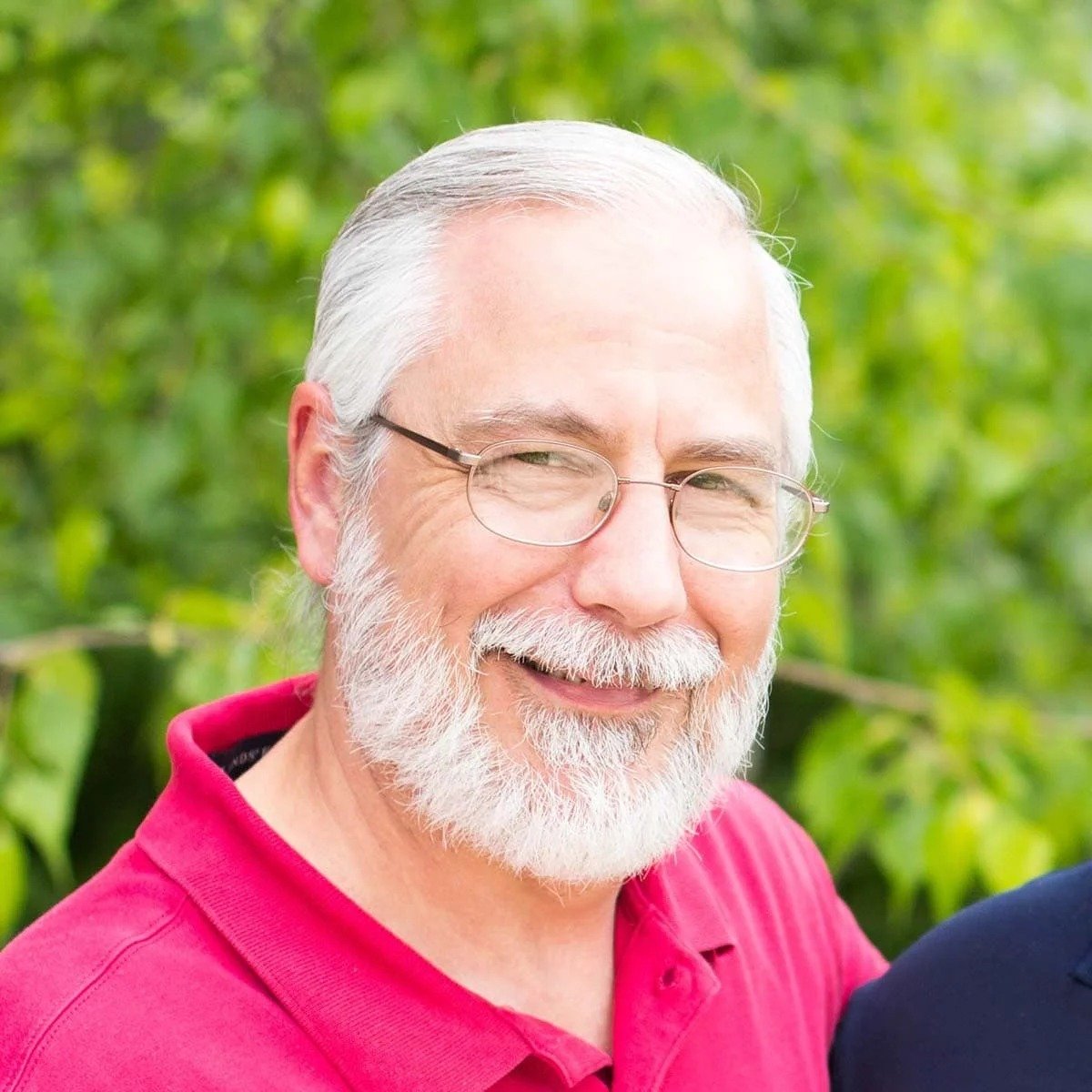
Sam Ivey never intended to be a preacher. Though his father and grandfather were both preachers, he just didn’t see himself following in their footsteps. On the other hand, he didn’t want to be a teacher either. There were lots of teachers on his mother’s side of the family, but it wasn’t something he thought he wanted to pursue. He did, however, have a pediatrician when he was growing up whom he thought was “a cool dude.” Sam thus spent much of his childhood and young adult life wanting and expecting to be a pediatrician. He even began to prepare for that profession in college. But that was before the Lord got hold of his heart and, as often happens when the Lord is involved, Sam’s plans took an unexpected turn.
But that’s getting ahead of the story. As Sam tells it, everything began with his name.
“I was named after my mother’s father, who passed away from a massive heart attack around the time Mom graduated from high school. She vowed then that her first son would be named Samuel, partly because he was such a significant guy. He was the first black assistant principal and head principal in Henry County, Georgia, where I’m from. He was well-known and well-loved, and his death sent shockwaves through the community. So I inherited his name, but with that I also inherited a lot of expectations.”
People who knew the relationship weren’t trying to put pressure on Sam, but, he says, “I definitely internalized it that way, and put a lot of pressure on myself to be great because he was great.” Being the son and grandson of preachers also came with its own set of high expectations. In school, he was successful academically, and playing sports gave him another avenue for achievement. When his parents divorced it only added to his difficulty.
He tried harder and harder to be the “good kid” everyone thought he was and that he expected himself to be. He thought that’s what God wanted from him too. But it never worked. He always failed in some way. Eventually he realized he could never be perfect, so he gave up on that and decided to be a “bad kid” instead. He started college at Georgia Southern in Statesboro with that attitude and threw himself into campus life in many ways, some good, some not so good. One night in his freshman year, after an important relationship fell apart, he found himself lying on his bed in pain and confusion, with nothing to fall back on but what he remembered from growing up in church. He prayed, “God, I know I’m not living right. Can you please send someone to show me the way?” Again, as is often the case with God, he showed up in an unexpected way.
At the start of his sophomore year, while helping new freshmen move into the dorms, Sam came across a young man standing by himself. Sam struck up a conversation with the man and discovered they had a mutual interest in soccer. When they met later to kick around a soccer ball the man told Sam that his name was Andrew, that he was not a freshman but had recently graduated from Georgia College and State University, and that he was on campus working with a college ministry called Campus Outreach looking to develop young Christian leaders.
During a Bible study they did together. Andrew shared with Sam the evangelistic “bridge diagram” based on Romans 6:23 (“For the wages of sin is death, but the free gift of God is eternal life in Christ Jesus.”) and how even the best efforts of an unholy man could not bridge the gap between him and a holy god—only Christ could do that.
Suddenly, everything clicked for Sam. “I understood at that moment that this whole thing is about Jesus and not at all about anything I could do. I finally understood why Jesus had to die for my sin—because he was perfect and I was not, and he took my place so I could live. He is the only way. I would say I became a Christian from that conversation.”
From that day on, Sam’s life slowly began to change. He got involved with Campus Outreach. He started to question his life goals and wondered if he wanted to be a pediatrician after all. His involvement in a plethora of campus organizations and leadership activities was teaching him a lot about what he was good at and opening up new possibilities he hadn’t considered. He thought about becoming an epidemiologist instead of a pediatrician. He decided he really liked mentoring people. He even entertained the idea of maybe being a teacher. He still struggled with being motivated by perfection and achievement, but he was slowly learning to let God’s grace have its way with him.
Then one summer he went to a conference related to Campus Outreach and heard a Christian singer sing a song based on Isaiah 6, “Here I Am, Send Me.” “When I heard that I thought: There are lots of people around the world who don’t know Christ. Could I be a missionary? Could I do some other kind of ministry?”
During his senior year, a friend again brought up the idea of being a missionary. Sam at first said no—then qualified his answer with, “Unless I’d be going to a Spanish-speaking country.” He’d always had an affinity for Latino culture, ever since a teacher in elementary school introduced him to the Spanish language. He took Spanish classes in high school and did a minor in it in college.
God apparently took Sam's off-hand comment a bit more seriously than Sam did. A week or two after the conversation, Sam attended a breakfast for graduating seniors that featured opportunities with various Christian organizations. One sounded particularly exciting: a two-year mission to Cusco, Peru, as part of a partnership between the PCA’s Mission to the World and Medical Campus Outreach.
The more he looked into it, the more attractive it sounded. “It involved a clinic in one of the poor areas of Cusco where they provide good medical care at reduced cost to people who wouldn’t normally have access to it. It would be a chance for me to shadow some doctors in actual practice and see if I still had any desire to be one. It would also give me a taste of serving in ministry. And it was in a Spanish-speaking country. It was one of those moments when you know God must really be listening to you!” In spite of some initial difficulty in raising financial support, Sam eventually made it to Cusco eager to dive into the culture and the work head-first.
His first surprise was that the Spanish he thought he knew so well was less help to him than he had hoped. The language in Peru was heavily influenced by Quechua (Inca) culture and many of the words are different than one might find in other Spanish-speaking countries.
The other surprise he encountered shocked him even more. He was unprepared for the level of internal conflict within the team he worked with. “It was crazy to me that Christians could not get along. I didn’t have a category for it. It was hard seeing these mature Christians, many of whom were well-established doctors, not getting along well with each other. At the end of the day, we’re all still sinners. It was a formative experience for me.”
Near the end of his two years in Peru, Sam had the opportunity to do some additional leadership assessment and training, for which he and some others were sent to Thailand. During the training, he gained some insight into relational dynamics that he thought could be helpful with his team back in Peru. One of the trainers asked him, “Well, Sam, how do you fit into all this conflict?” Sam said, “It really doesn’t have anything to do with me.” To which the trainer responded, “You’re a member of the team. Even if you’re not directly involved in the problem, you could be directly involved in the solution. You can contribute to the healing and reconciliation.” That hit home—hard. “This challenged me to rethink my role as a team member. I went back to Peru with a newfound appreciation for how God had gifted me, and with a new vision for ministry.” Unfortunately, by the time he got back, the team had completely fallen apart and many members had to return home. Sam finished out his time in Peru serving as an interpreter for other doctors from Canada and the US who could not speak Spanish.
But God used even that as another piece in the puzzle of Sam’s preparation for ministry. One day during a medical campaign, he was helping the doctors with a man who had terrible aches and pains, which the man attributed to the trauma he had experienced growing up. At that moment, Sam says, “There was no audible voice, but I sensed God telling me, ‘Sam, you’re not going to be a physical doctor, but a spiritual doctor.’ I realized in that moment that physical medicine has its limitations. You can diagnose sicknesses based on the symptoms and often there are vaccines that can provide immunity or medicines that can help or cure the sickness. But there are times when someone has experienced something so traumatic that there’s a sin issue, and no physical medicine can deal with sin. Only the gospel can do that. I felt like that was where God gave me my internal call to ministry.”
Sam returned to the States and to the church that had been instrumental in supporting him in Peru, First Presbyterian (PCA) in Augusta, Georgia. He interned at the church while also working for Campus Outreach at Paine College, an historically black college. He talked with one of the pastors at First Pres about his interest in seminary. The pastor said, “Sam, you could go anywhere for seminary, but Covenant Seminary produces great pastors. If you want to be a great pastor, that’s where you need to go.” So, Sam visited Covenant and loved it. “It just felt like a place with actual community life. It felt like a close-knit family.” He decided to start courses online part time and move to St. Louis later to complete his degree.
Meanwhile, the Lord continued working behind the scenes. Through a friend, Sam met Caroline, the woman who would soon be his wife. The relationship started slowly, but soon blossomed into the real deal. They talked early on about the inter-racial aspect of their relationship and both were willing to accept the challenges it might bring. Caroline was on board with Sam going to seminary and even had family members in St. Louis. So they married on June 12, 2021 (the anniversary of the date in 1967 when interracial marriage became legal in the US). Two weeks later, they moved to St. Louis, where Caroline now works as a teacher at a local school. Sam graduated with his MDiv in May 2024 and is now working on a Master of Arts in Counseling, which he'll finish in 2026. Meanwhile, he is gaining valuable experience by doing a pastoral residency at a local church called New City Fellowship–West End.
Of his time at Covenant, what has most helped shape Sam for ministry? “Definitely the story work we do here—understanding that God is writing a story and seeing how your story fits into that, how all our past experiences shape us. Then learning to reconcile with that past and acknowledge the joys and growth and grace of God in the midst of the pain. Knowing myself better makes me better able to love others.”
Now that he has a seminary degree and some ministry experience under his belt, what advice would Sam give to others thinking about ministry? “Trust God. That’s the cliché answer, but it’s true. God really does care for his people. It’s been evident in my story. God provides everything needed along the way, and he grows us into the people he wants us to be. Trust him.”
Note: This article first appeared in the spring 2024 edition of Covenant magazine. Get your copy or subscribe to Covenant here.