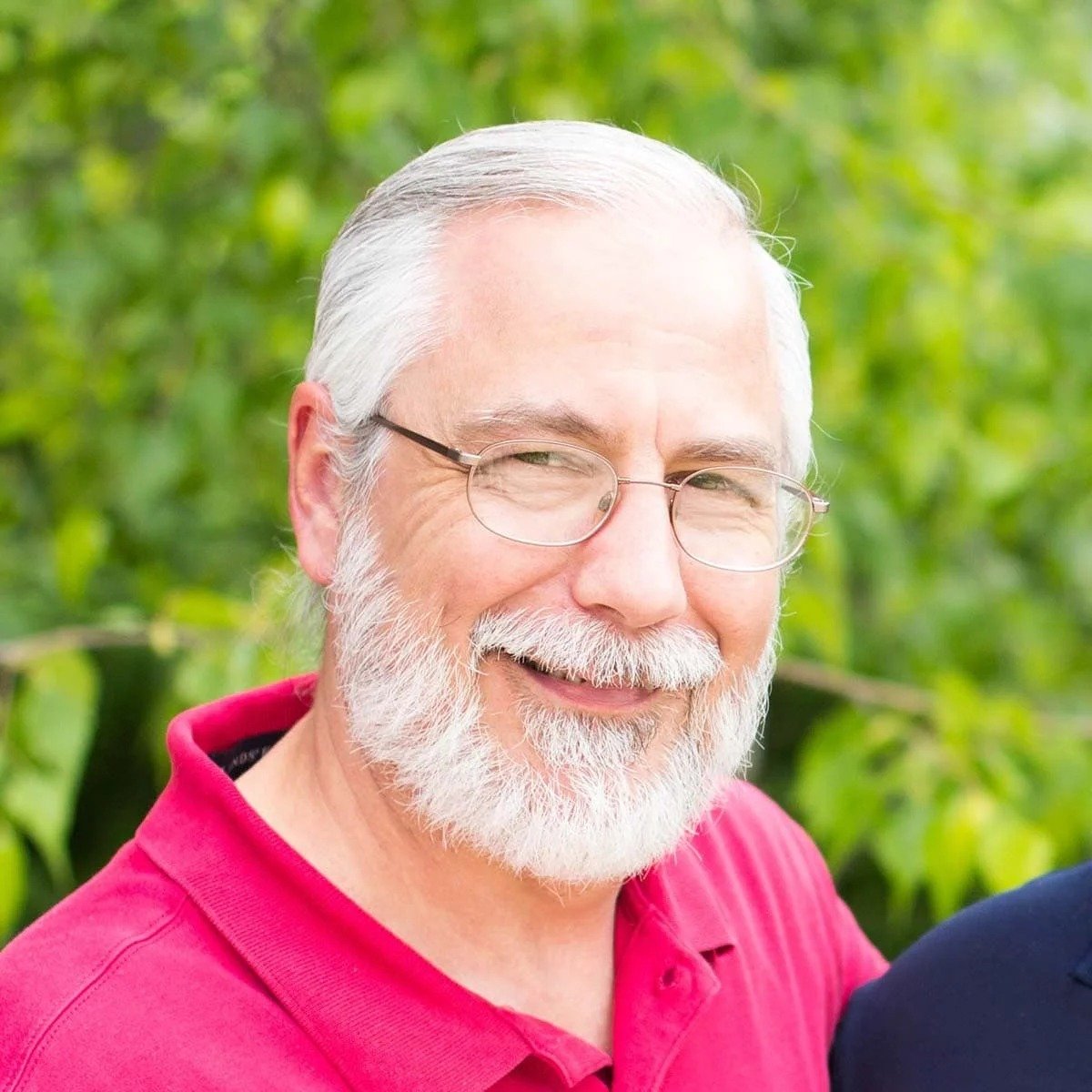
From lumberjacking in Montana to PhD studies in Scotland to training pastors at Covenant Seminary and in sometimes-dangerous countries around the world, Professor of New Testament Dr. Bob Yarbrough’s journey of faith is a powerful testimony to the amazing grace and faithfulness of God. He shares some of his story in this recent interview.
Rick Matt (RM): Thanks for agreeing to talk with me. Can you first give us a bit of personal background and a glimpse of how you came to know the Lord?
Bob Yarbrough (BY): Sure. There is a little Christian heritage in my family background, but not much. My paternal grandfather was a Baptist layman, a subsistence farmer in the Ozarks, and was a deacon and song leader in his church. He would pray for me and my siblings, and my mother often took us to church, but I never saw my father pray. I wouldn’t say I grew up in a Christian home.
I was 9 when I first heard the gospel during an evangelistic weekend at the Baptist church we attended. I knew I was a sinner, I believed that Christ died on the cross for my sins and that I owed him my life, and I was willing to offer it to him. But I didn’t really know what being a Christian meant except going to church. I never heard about discipleship until I was 20.
Through my teen years I did all the things teens usually do, but I worked a lot too. I got married at 19 to Bernie, a Catholic girl I knew in high school, and we moved to Montana to attend the University of Montana. We went there broke and both had to work. On Sundays, we attended a Catholic church one week and a Baptist church the next. One week, the Baptist pastor invited us home for lunch, and he led my wife to Christ. That really began our spiritual pilgrimage together.
I started serving in that Baptist church, working in the nursery and teaching the youth, even though I didn’t really know much myself. I also drove the church bus and shoveled snow. A year or two later they asked me to be a deacon. I read the Bible a lot but didn’t know much about Bible scholarship or study resources. Still, in the first five years of our marriage, my wife and I both grew a lot as Christians.
I had started a forestry degree at college but ended up working as a logger for four years while my wife got her nursing degree. But the Bible was always on my mind and I struggled with my spiritual direction. Our plan at the time was to buy some land in northwest Montana and live out our days there. But one day after church, I had this distinct impression that God was speaking to me. His question was, “Are you willing to devote your life to spreading the gospel?” Well, if God asks you to do something, there’s really only one answer. I didn’t have a choice. I said yes. I tentatively shared this with my wife not knowing what she would think. But she was on board with it, and that began a new phase for us. We had followed Jesus thinking he’d help us with the plans we set for ourselves, but now I realized my life was not really my own anymore.
RM: Where did that clear sense of a call from God lead you?
BY: Not where I initially thought it would! I worked as a logger until Bernie graduated, then we moved back to Missouri, where she worked as a nurse while I went to a Christian college to finish my degree. An English major, I also studied Greek and as much Bible as I could. When I graduated, we moved back to Montana. I thought I’d be a bi-vocational pastor or church planter. I worked as a logger four days a week and worked in the church three days a week, but soon realized I still didn’t know the Bible very well. After a year, we moved to Illinois so I could attend Wheaton College grad school, where I did my MA while serving as interim pastor at two different Baptist churches in the Chicago area. I did tree work in the summer to make money. By then, we thought we would be missionaries in Europe.
Around this time, my professors encouraged me to pursue a PhD, so we went to Scotland for three years to do that. I eventually became a deacon at a little Scottish Baptist Union Church where Bernie and I also served as the youth leaders. In 1985, we came back to the US and I accepted a teaching appointment at Liberty University, while continuing to raise support to serve as missionaries at a seminary in Germany. After two years we hadn’t raised even half of what we needed. Then in 1987 Wheaton called me to fill a New Testament position. I taught there for four years and also served as an adult ed teacher at College Church. Near the end of that time, I was attracted to an ad for a New Testament professor at Covenant Seminary, and even though my ordination at that point was still with the SBC, they offered me the position—with the proviso that in two years I would have to be a Teaching Elder in the PCA.
So, I read up on the Reformed faith. I realized I was a Reformed Baptist. I had also realized from my years of study up to that point that I was a covenant theologian. As I re-read the Westminster Standards, I became convinced of a covenantal understanding of baptism. In April 1991 I moved my ordination to the PCA, and I taught at Covenant—the first time—from 1991 to 1996.
RM: What happened to draw you away from Covenant?
BY: Trinity Evangelical Divinity School in Deerfield, Illinois, contacted me—three times—about teaching there. The third time, my wife said, “You should check it out.” I interviewed, but for several reasons, we initially did not want to go. But this was one of those times where God said, “You should go.” How do you know God is telling you something? One clue is you don’t want to hear it. You can’t always make decisions based on listing all the pros and cons. We had our list, and the only pro was, “We think this is what God wants us to do.” So, we went. We were there 14 years.
RM: And what brought you back to Covenant?
BY: We decided we needed to be in St. Louis to care for my aging mother and stepfather. Covenant had a New Testament opening and was willing to bring me back. We moved here in 2010, and I taught at Covenant while my wife left nursing to care for my mother and stepfather. She did that for the next 14 years. Both have passed away now. I was blessed to be able to do both of their funerals.
RM: I’d like to pick up on another thread of your story. I know you have for many years done annual teaching trips to train pastors in Africa and other places. How did that come about?
BY: When I was at Wheaton they had a program called the Wheaton Faculty Missions Project, which got requests from overseas for all kinds of teachers, especially Bible teachers. I started going on some of these trips, first to Cairo, Egypt, in 1989, then to Romania in 1990 and 1991. I came to Covenant in ’91, so missed a couple years, but beginning in 1994, since I had this established relationship with the Romanians, Wheaton sent me back. I went twice a year for one week each time from 1994 to 2007 Emanuel University there. In 1995, I went to Khartoum, Sudan, to Nile Theological College, a school supported and staffed mainly by Reformed and Presbyterian churches in the US. Sudan was unbearably hot and my students suffered terribly from malnutrition and living in refugee camps. There I saw the real hunger for the Word of God in developing nations. The Christians in Khartoum were persecuted and had nothing to eat, but they wanted training to become pastors!
From 1999 to 2012, I taught twice a year in Khartoum in addition to Romania. The sponsoring church was Presbyterian, the Khartoum Evangelical Church, founded over a hundred years ago. In 2012, we got shut out of Sudan, so in 2013, we went to South Sudan to train pastors for a week. Then a civil war started in South Sudan. So, in 2014, we started going to South Africa, and we still go every October for a week in Cape Town and Johannesburg.
RM: And this is all through the Wheaton project?
BY: Not after 1999. It’s too complicated to explain how it all evolved. It has to do with a trust fund in Britain, some generous Christian donors, and a Lutheran church in Chicago where I have connections and I preach occasionally. They put up a considerable amount of money each year to support this. It’s really just God raising up people who keep putting money in this fund, so we keep going. One of those donors is a doctor, a retina specialist, who went to Sudan in conjunction with our conference 13 times to provide cornea transplants for people who needed them. I once told him I couldn’t believe how the money kept coming. He said, “People keep giving because they know you’ll use it for what they give it for.”
His own Christian generosity was evident even beyond his medical expertise. One time as he headed back to the States, he handed me $400 and said, “Do something good with this before you leave.” That night I met with a group of recent Christian converts, among whom was a little girl who looked to be three or four years old but was actually eight. She had chronically infected tonsils and adenoids and could barely swallow. An operation to fix this would cost about $400, which was an absolute fortune for these people. Through my friend, the Lord had provided the funding. That had a powerful impact on the community. It was a blessing to be part of that.
RM: God certainly does some pretty amazing things through the generosity of his people.
BY: We’ve seen him do it many times. He’s also brought us through many close calls. Once in Khartoum my companion and I were confronted by four guys who saw us go through customs and knew we had money and computers. They were pretty threatening, but I didn’t see any weapons, so we pushed our way through to where people were waiting for us. That was a tense moment. Another time we were almost arrested at the airport because an informer told police we had been baptizing Muslims, which we had not. As we boarded the plane, we heard the loudspeaker call our names to come to the security desk. We got on the plane because the passport agents didn’t speak good English or recognize our names, but the plane was held while security came looking for us. They photocopied our passports and then, for reasons I don’t understand, let the plane go with us aboard. Shortly after that the persecution of Christians in Sudan increased dramatically. It turned out to be significant that the Presbyterian church in Khartoum had been able to encourage so many pastors in those conferences over the previous 13 years. Things are worse now, with the Christian minority caught in the middle of an ongoing war between rival Muslim armies. Some have fled to other countries but others aren’t able to get out.
RM: It sounds like God has greatly used those pastoral training conferences to encourage and build up his church for hard times.
BY: God never wastes the making of disciples. When you really connect with the people you’re helping to equip, it has a ripple effect—probably more than we know. God has ways of multiplying the effects of his work through us that we’re not able to plan for or foresee.