“We’re There to Show Them Jesus”: Rev. Chad Brewer (MDiv ‘00)
Most Covenant readers are familiar with Reformed University Fellowship (RUF), the Presbyterian Church in America’s (PCA) campus ministry that has impacted countless people in our denomination and beyond.
What may be less known is that through its RUF International (RUF-I) arm, the organization has, since the late 1980s, been expanding its unique brand of college outreach specifically to international students studying at American colleges and universities. There are currently 25 RUF-I ministries on US campuses. Over the last decade or so, RUF has also branched out even further through RUF Global (RUF-G), which, in partnership with the PCA’s Mission to the World (MTW), the ministry of Serge, and several national denominations, has begun ministries to college students on 8 campuses in other countries. All of these growing ministries provide an essential Reformed Christian presence in the lives of young people during some of the most formative and challenging years of their lives.
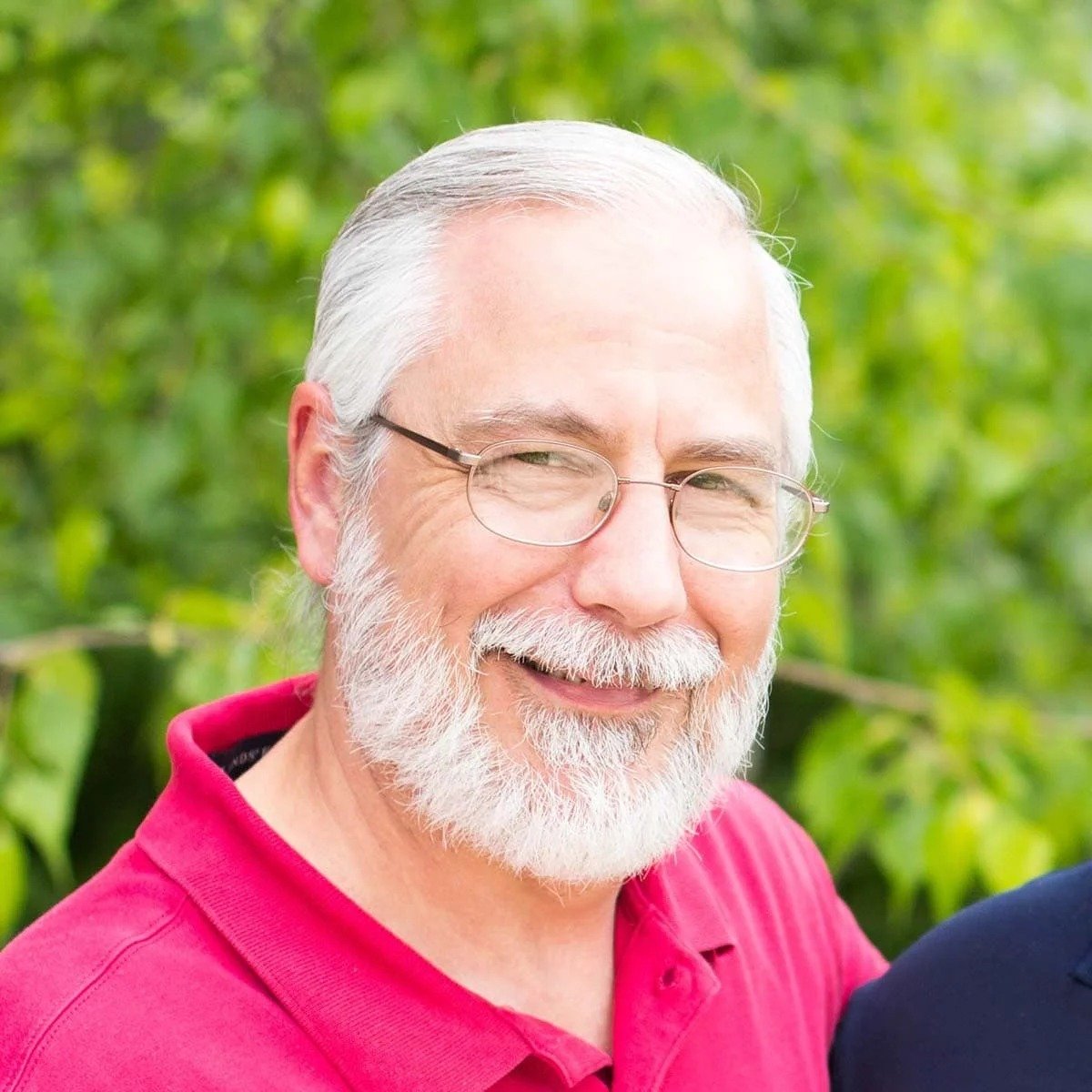
Covenant Seminary grad Rev. Chad Brewer (MDiv ’00) knows all about the challenges college students face and the difficulty of struggling with life’s hard questions without much of a framework for answering them. For him, as for many others, college campus ministry became a safe harbor for asking honest questions, helped him to experience true Christian fellowship and real spiritual awakening, and planted the seeds of his future life calling. Chad now serves with RUF as Assistant Coordinator for RUF International and RUF Global, overseeing and equipping teams to start and run the individual campus ministries under these names. Before stepping into this role, he spent 21 years as an RUF Campus Minister himself, serving first at the existing RUF ministry at the University of Missouri–Columbia, then starting new ones at Penn State University, the University of Minnesota, and the University of California, Irvine. He loves to speak about how the Lord used such a ministry so powerfully in his own life.
Asking Questions—AND MEETING CHRIST—ON A COLLEGE CAMPUS
“I grew up in a small city called Westminster, Maryland, on the Maryland-Pennsylvania border,” Chad says. “I did not grow up in a Christian home, and for college I went to Shippensburg University, in South Central Pennsylvania. Like many students, I started wrestling with the meaning of life and asking questions I had never really wrestled with before. I was getting depressed. One day I just started walking and ended up at a nearby church, sitting in the back listening. I bought a Bible and tried to read it, but it didn’t make all that much sense to me.”
After about three months Chad grew more discouraged. One day he saw a sign on campus that said, “Christian Fellowship—Come and be loved.” He wanted to go, but he also thought it sounded a little weird. He convinced some friends from his dorm to go with him, and they went the last week of the semester. They were surprised to find 70 or 80 people in attendance, all of whom were friendly and welcoming. Chad decided he would come back after Christmas break and keep coming until he could decide whether what he was hearing at the group was true or not.
The second meeting after the break turned out to be a three-hour prayer party. “I thought, ‘Three hours!’ But I had promised myself to do everything they did until I believed it or not, so I went. I sat there for the entire three hours listening to people pray. Afterwards a guy asked me if I would like to do a Bible study with him. So, I did. We read the Bible twice a week. It was the book of James. I became a believer a few months later.”
Chad notes that this group was not like the campus ministries most of us are familiar with, such as RUF, Cru, the Navigators, or InterVarsity. This one was entirely student-led and it was the only such group on campus. After he became a believer, he got deeply involved. A year and a half later, he was President of the group, even though, he says, “I was still a very immature Christian, very young in my faith. I didn’t have a lot of older people in my life to guide me. I went to church a little, but I was church hopping. I made all these decisions pretty much on my own.”
Chad began to rethink what he wanted to do with his life. He had intended to become a high school teacher and sports coach, but by the end of his sophomore year, he wasn’t so sure. He thought God might be calling him to the ministry. “I really loved talking to people about Jesus. In my senior year I began to explore ministry options. There was a campus ministry based in Pittsburgh called Coalition for Christian Outreach that sounded good. I interviewed with them and got a job. But I ended up not taking it because I thought I needed more training. I needed to go to seminary. The question was: where?”
A friend gave him a magazine advertising a large number of seminaries. It had pullout cards to mail in for more information. He knew nothing about any of them or the various denominations they were associated with. He chose nine of the info cards, filled them out, and sent them in. Another friend advised him to be cautious since not all seminaries are alike. Chad decided to only apply to seminaries that emphasized one’s relationship to Jesus, and not all the other benefits of attending that school. As the responses came back, one by one he opened the envelopes. One by one he read, “We have great professors,” or “We have wonderful classes,” or “We have a high placement rate.” One by one he tossed them in the trash—except for the one response that began, “We believe that a seminary education is successful only if—at its end—the student knows Jesus Christ more intimately than at the beginning.” That one school was Covenant Seminary. Chad had never heard of it but he decided that that’s where he would go. He began the application process.
FACING CHALLENGES—AND FINDING GRACE—IN SEMINARY
Meanwhile, he graduated from Shippensburg, went back home to Maryland, and got involved with a church there Chad asked the assistant pastor if he had heard of Covenant Seminary. The pastor laughed, “Of course. We’re a PCA church and Covenant is the PCA seminary.” Chad had no idea. The pastor asked if he wanted to meet the then-President of the seminary, Dr. Paul Kooistra, who would be speaking nearby for a fundraising event in two weeks. Chad jumped at the chance. That meeting sealed the deal for him. But the Lord’s mysterious way of working brought about a slight detour first.
“I have a brother who is eight years younger than me,” Chad says. “He was not a believer, and he didn’t have any other people in his life who were. He looked up to me and I felt like I couldn’t go off to Covenant and leave him that way.” Chad decided to defer seminary for a year and spend time with his brother, a sophomore in high school at the time. “We hung out together and did a Bible study for about year. By the end of that time, my brother became a believer. God is good. Then I went to Covenant Seminary.”
The first semester was challenging, to say the least. He began with intensive summer Greek, often referred to by students as “suicide Greek,” and rapidly found himself floundering. After a week and half he called the professor, Dr. Jack Collins, to tell him he was dropping out. “Dr. Collins talked with me for 45 minutes. He was very understanding. He calmly talked me down off that emotional ledge. I did finish the course and things got better after that, but it was rough going at first.”
The next few years were a whirlwind of learning, challenge, growth—and immense blessing. Chad came to understand the meaning of God’s covenant, the fullness of God’s sovereignty, the depth of God’s love, the caring way that Jesus did evangelism, and, most importantly, the power of God’s transforming grace in ways he never had before. “Dr. Phil Douglass’s class on Spiritual Formation was especially helpful for me,” Chad said. “He introduced me to Jerry Bridges’ book Transforming Grace, which was a life-changer. And his teaching on divine design showed me how the Lord made me in specific ways for ministry.” A recommendation from Dr. Douglass also gave Chad the opportunity for an internship at a church in Palo Alto, California—an opportunity that would help set the course of his ministry life.
Though the internship gave him opportunities to preach, the major part of it was teaching a six-week summer class on evangelism and pursuing young people to get them more involved in the church. Chad enjoyed it all, but he especially loved working with young people, reaching out to them, encouraging them, sharing Jesus with them. He loved helping a group develop and begin to grow. The experience was wonderful, but he still had no clear idea of what he would do after seminary.
As graduation time loomed, advice came from an unlikely source. “I worked on the grounds crew at the Seminary to help support myself,” Chad notes. “My boss was a man named Eric. I was talking with the other guys on the crew about how I didn’t know what to do. I didn’t really want to pastor a church. I had been impacted by campus ministry but had already turned down a job with one. I was at a loss. Eric overheard this and said almost casually, ‘Chad, why don’t you just go do RUF?’ Something clicked for me and I knew that that was what I was supposed to do.”
GATHERING PEOPLE—AND MAKING DISCIPLES—IN THE US AND BEYOND
So, after graduation, he went to the University of Missouri to take over the existing RUF ministry there. He stayed for five years, and the experience simply confirmed for him that he was doing what God meant for him. As with his internship in California, in the midst of all the teaching and preaching and seeking out potential new leaders, the part he enjoyed most was pursuing people who were not yet in the group, not yet believers. After Mizzou, he went to start an RUF chapter at Penn State, and again after five years went to start another one at the University of Minnesota, then another at the University of California–Irvine. In every case, he says, “What I really loved was gathering and connecting with people who were not Christians and sharing Jesus with them. That’s been the pattern of my ministry with RUF: gathering the group and helping it develop to sustainability. Then I’m ready to do something new.”
The most recent “something new” was accepting the role as Assistant Coordinator for RUF-I/RUF-G in 2019. That move developed out of a couple of mission/vision trips with the PCA’s Mission to the World (MTW), and out of MTW’s Global Missions Conference in 2017. In 2005 Chad visited Riga, Latvia, then, in 2014, he went to Italy, where MTW was exploring partnership possibilities with a Reformed Baptist denomination. The Italians were especially interested in RUF as they had nothing like it. In the course of conversations, Chad met an American graduate student from Ohio studying at the University of Trent. The man led a Bible study for about 12 students there (out of approximately 16,000 at the time), but he was graduating soon and concerned about finding someone to lead it after he left. Chad was taken aback to learn that this was the only such ministry on the entire campus (unlike some American universities that often have twenty or more), and that none of the participants were Italian; all were international students from other countries. Through these experiences, “the Lord stirred my heart again for reaching underserved people with the good news of the gospel.”
In 2017, Chad attended MTW’s Global Mission Conference in Dallas. He came back energized, feeling that familiar movement of the Lord in his heart toward some new ministry opportunity, but he didn’t yet know what. Soon after this, RUF approached him with a proposition: “How would you like to coordinate the efforts of RUF International for us?” Chad and his wife, Christie, both loved the idea, so, he began his new role with RUF-I in 2019.
At that time 16 American campuses hosted RUF-I chapters; today there are 25. But with 1.1 million international students studying at American universities, there is still significant work to be done to reach more of them. “There’s never been a time in history when the nations of the world have sent this many students to another nation to be educated. We have a unique opportunity to welcome international students, the majority of whom are black. Many come from places where we can’t send missionaries. It’s a wonderful grace that the Lord in his kindness is sending so many people to us.” Of the 25 RUF-I chapters, 20 are on campuses that also have a standard RUF ministry; though RUF typically ministers to American undergraduates and RUF-I is aimed more at international graduate students, leaders seek opportunities for cooperation and collaboration between the groups, which benefits everyone.
Chad also coordinates RUF Global, which functions similarly to RUF or RUF-I ministries with ordained ministers serving as shepherds for and connecting links between college students and local churches. There are currently eight RUF-G ministries—four led by PCA teaching elders as missionaries with MTW (in Colombia, Ukraine, West Africa, and Japan), and four led by men ordained in their respective national churches (Mexico, Uganda, Gambia, and Australia). These leaders are trained in the US by Chad and his staff, and he and others from RUF and MTW hold monthly Zoom meetings and sometimes visit in person to ensure that they stay well connected and well resourced for their various ministries. Chad notes that ongoing conversations with several leaders could possibly double the size of the ministry in the next few years.
SHARING THE HEART—AND THE HOPE—OF CAMPUS MINISTRY
From experience, Chad knows how crucial campus ministry can be for young people. “Campus ministry is really strategic,” he says. “In 2022, the Pew Research Center said that 31 percent of people in the US ages 15 to 29 will either move into the church or, if they’re already there, walk away from it. People are going through big transitions during those years. They’re making life-changing decisions on their own for the first time. They’re easily influenced by those they know and those they choose to follow. So, there’s this very narrow window where we have the best possibility of reaching them. It only gets harder after that.
“Ministries like RUF provide a safe haven to ask questions, experience fellowship in a non-threatening environment, and be guided by trained ministers who care about you, point you to Jesus, and help connect you with a good local church. Without that kind of influence, it’s no wonder so many young believers are tempted to turn away from their faith. And without that kind of influence, there would be fewer opportunities for unbelievers to hear the gospel. People are longing for relationships, longing to be loved, longing for Jesus, though they may not know that’s what they need. Campus ministry is a beautiful way to make the gospel real and tangible during a time when many students are wondering what matters most. We’re there to show them Jesus.”
Note: This article first appeared in the fall 2024 edition of Covenant magazine. Get your copy or subscribe to Covenant here.