The Preacher’s Life
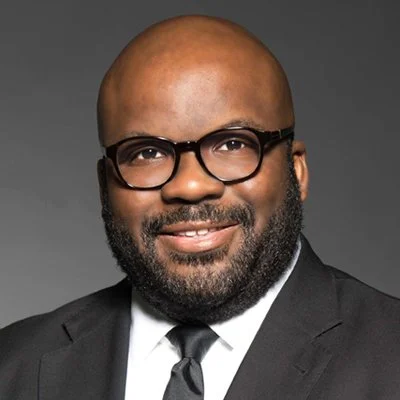
Rev. H. B. Charles Jr. was the featured speaker last fall at the 2025 edition of the Covenant Seminary Preaching Lectures, focused on the theme “The Preacher’s Life, Labor, and Leadership.” This article is adapted from the first lecture in that series. Full audio of all the lectures is available for free in the Resources section of the Seminary’s website at resources.covenantseminary.edu.
May grace and peace be multiplied to you! I count it a privilege, a joy, and an honor to be with you today to talk about a matter that consumes my life: biblical preaching. Let me say upfront that I am not a scholar. I am not a theoretician. I’m a local pastor with some itinerant ministry. I began my first pastorate at the age of 17, and I am often asked, how does a 17-year-old pastor a church? One answer to that is: he doesn’t. Basically, all they let me do at first was preach. But, in those early days, I discovered that there is power in the pulpit, and there is, more importantly, power in the Word of God. So, as a student of and advocate for expositional preaching, my burden here is to be an aid for those who are in the trenches of ministry and an encouragement to those whose calling and work is gospel proclamation.
The over-arching theme for these lectures is “The Preacher’s Life, Labor, and Leadership.” For this first lecture, I want to focus on the first of those main areas: the preacher’s life.
In 2 Timothy 2:15, the apostle Paul says to Timothy, “Do your best to present yourself to God as one approved, a worker who has no need to be ashamed, rightly handling the word of truth.” In a very real sense, this verse is the bottom line of Christian ministry. “The bottom line” is an economic term referring to how businesses gauge the success or failure of their work. It’s about profit and loss. And, as they say in the business world, “The bottom line is the bottom line.” Every walk of life, really, has some sort of bottom line. In sports, it’s winning games, earning championships. In school, it’s making good grades, going to a good college, getting degrees. What is the bottom line of Christian ministry? I think 2 Timothy 2:15 is a succinct statement of the essence, the heart, and the foundation of Christian ministry. That’s what it’s all about.
Three Questions for the Preacher “Approved By God”
Over the years, there are three big questions I have asked myself devotionally based on 2 Timothy 2:15. The first question is: Is God well pleased with me? Paul tells Timothy to “Do your best to present yourself to God as one approved.” So, am I approved? Do I study the Word of God? Am I diligent in doing that? Is God well pleased with me?
The second question I ask myself is: Is my work well done? We are called to be workers who have “no need to be ashamed,” so we don’t want to present our work for final inspection with embarrassment, disappointment, or humiliation. We want to present our work with the hope and expectation that our faithfulness to our calling will win a solid “Well done!” from the Lord.
The third question is: Is the Word rightly handled? Paul begins this verse with a very personal statement—“Do your best . . .” You, yourself—each of us who preaches—needs to live in a way that is approved of God, and out of the overflow of one’s devotion to God, we do our work as those who are not ashamed.
One parenthetical note to this: If you want a provocative study on this topic, just read through the writings of Paul and get a sense of his theology of shame. In Romans 1:16 he says, “I am not ashamed of the gospel.” In Philippians 1, he says, “it is my eager expectation and hope that I will not be ashamed, but that with full courage now as always Christ will be honored in my body whether by life or by death. For to me to live is Christ and to die is gain” (Phil. 1:20–21). And here in 1 Timothy 2:15 he says, he wants to be “a worker who has no need to be ashamed.” Of course, the shame Paul speaks of is God-centered, not man-centered. You can be a smashing success with men and a horrible failure with God. So, he says, “I want to be a worker who has no need to be ashamed before God.” And the key to that is rightly handling the word of truth, which flows from the starting point of a life that is approved of God.
Ten Answers for the Preacher “Approved By God”
What does it mean for a preacher to be “a worker approved of God”? I’ll give ten answers to that question. The worker approved by God is:
1. A Converted Preacher. This may seem obvious or go without saying in a seminary setting like this, but it is not a truth that we should take for granted. The Puritan Richard Baxter said, “Take heed to yourselves, lest you should be void of that saving grace of God which you offer to others and be strangers to the effectual working of that gospel which you preach, and lest, while you proclaim the necessity of a Savior of the world, your heart should neglect him.” So the starting place for a worker who is approved of God is that he must be a converted preacher.
This begins, of course, with trust in the good news of Jesus Christ. I remind us of Romans 1 again, which says, “I am not ashamed of the gospel, for it is the power of God for salvation to everyone who believes, to the Jew first and also to the Greek. For in it, the righteousness of God is revealed from faith for faith, as it is written, ‘The just [the righteous] shall live by faith’” (Rom. 1:16–17). So to be a converted preacher is to repent of your own sins and turn to Christ in saving faith and submit your life to his Lordship. In 1 Corinthians 9:24–27, Paul says, “Do you not know that in a race all the runners run, but only one receives the prize? So run that you may obtain it. Every athlete exercises self-control in all things. They do it to receive a perishable wreath, but we an imperishable. So I do not run aimlessly. I do not box as one beating the air, but I discipline my body and keep it under control, lest after preaching to others I myself should be disqualified.” God forbid!
2. A Called Preacher. One of the earliest pieces of advice my father—who was also my pastor—gave me about preaching was this: If you can keep from preaching, do it. I thought that was the worst advice he could give his young son, who felt a call to preach. I would later understand that he was trying to emphasize for me that the work of the ministry is a calling that you heed, not a vocation that you choose. I believe God calls the preacher to this holy and sacred and divine task of proclaiming the gospel of Jesus Christ.
Romans 10:13 declares this wonderful news: “For whoever calls upon the name of the Lord shall be saved.” Then, in verses 14 and 15, Paul presents a series of dilemmas that prevent lost people from calling on the Lord for salvation: “How can you call on someone you do not believe in? And how can you believe in someone you’ve never heard of? And how shall they hear without a preacher? And how shall they preach unless they be sent?” (Rom. 10:14–15). So I believe a worker who is not ashamed before God is one who surrenders to a personal call to the ministry, a divine call to the ministry, and an affirmed the call to the ministry. God save us from those who get a Study Bible and Facebook Live in them and that’s their call into ministry! I think “How shall they preach unless they be sent?” has a dual meaning: sent by God and sent by the church.
3. A Qualified Preacher. This is coupled to the business of a call to ministry. Indeed, the preacher should be called, but he also must be qualified. In 1 Timothy 3:1, Paul says, “The saying is trustworthy: If anyone aspires to the office of overseer, he desires a noble task.” The beginning of the work of this noble task comes with a desire—or to state it more strongly—a burden to take up this task. But then Paul says right after that in verse 2, “Therefore an overseer must be . . .” and begins to list the qualifications for the role. He says the overseer “must be.” So, it cannot stop with one’s desire to preach or desire to lead or desire to pastor. The preacher must be qualified. Of course, the qualifications for ministry are recorded in 1 Timothy 3 and in Titus and in 1 Peter 5. Those three lists of qualifications fall into two big categories.
The first category would be moral qualifications. Those various passages I mentioned pretty much cover the whole gamut here. Paul and Peter bid the church to consider a man’s relationship to the Lord, to his family, to the church, and to the world around him. There’s a heavy emphasis on moral qualification. The minister must remember that before the Lord who you are is infinitely more important than what you do. There is a word for one who is teaching and leading and preaching, but whose ministry does not flow from a heart devotion to God. The word Jesus uses for this is: hypocrite—an actor who pretends to be something before others that he knows he is not before God. So the moral qualifications for a preacher are stated explicitly, and the whole of all three lists is composed of those moral qualifications, with one exception.
The second category consists of one pastoral qualification. There is no list of multiple pastoral qualifications, just one simple but high standard. We see it in 1 Timothy 3:2: “He must be able to teach.” This reminds us of the priority in preaching of the role of teaching. In the midst of our pastoral work, we must be able to teach. To be able to teach is about content, not communication. It’s not about how a man presents, but what he proclaims. The question is never, “Can a man preach?” The appropriate question is always, “What does that man preach?” The priority is to get the gospel right before you get it out.
4. A Godly Preacher. The qualifications are not an entry level exam that you have to pass so you can get in. It is a calling of life. Thus, 1 Timothy 4:16 says, “Keep a close watch on yourself and on the teaching. Persist in this, for by so doing you will save yourself and your hearers.” I think this is the whole ballgame. What is the ministry about? This is a great summary of the whole thing: “Keep a close watch on yourself and on the teaching.” Watch your life and your doctrine. Guard your character. Guard your convictions. That’s the whole ballgame.
Now, you might say to me, “But surely there has to be something more than that.” And of course, there is: 1 Timothy 4:16 says, “Persist in this.” The idea is, watch your life, watch your doctrine, and keep hitting “repeat.” The rest of your ministry life is just the cycling of that same commitment to the guarding of your life and the guarding of your teaching over and over again to the end. And the reason why I say that this is the whole ball game is because of the intended result of these instructions: “By so doing you will save yourself and your hearers.” So, on the one hand, you need to watch your character, and there are three independent, external, objective indicators of our devotion to the Lord Jesus Christ. Those would be your time, your money, and your relationships. We must guard those three perpetually.
But not only must we watch our character. We must also watch our convictions. What does that mean? Be clear about what you believe. Be clear about biblical theology, reading and studying the Scriptures with an understanding that the Bible, made up of 66 books, two testaments, written by forty-something men from shepherds to kings, in three different languages, over a period of 1500 years, is one grand story that integrates, progresses, and climaxes in the Lord Jesus Christ. Be clear about systematic theology—how Scripture addresses its themes comprehensively. Be clear about historical theology and the history of interpretation. For any text you preach, the church has been preaching and teaching and writing and debating and arguing about that text for 2000 years. I tell the young preachers around me, “If you have an idea about that text this week that no one in church history has seen in 2000 years, that doesn’t mean you’re deep, it means you’re wrong. The Lord didn’t skip over the church fathers and the Reformers and Spurgeon and give the meaning of that text to you this week.” And then, in the area of practical theology—and really in all of life—we must keep asking as we preach, and study, and seek to understand the Scriptures: How then should we live?
5. A Loving Preacher. First of all, the preacher must have a love for Jesus. Paul says in 1 Corinthians 5:14–15, “For the love of Christ controls us, because we have concluded this: that one has died for all, therefore all have died; and he died for all that those who live might no longer live for themselves, but for him who for their sake died and was raised.”
But there must not only be a love for Jesus; there must also be a love for souls. In his great book The Preacher and His Preaching, A. P. Gibbs writes, “A lawyer may develop great ability in his profession without necessarily loving his clients. A physician may enjoy great success without loving his patients. A businessman can rise to great heights of prosperity without loving his customers. But a preacher can never be a real worker for Christ, without a deep passion for the lost souls to whom he preaches the gospel of God’s grace.”
Then, in addition to a love for Jesus and a love for souls, there must be a love for the church. Brother preachers, may the Lord help us to remember that the church is not some necessary evil. It is the best thing going. The church is the hope of the world. Paul says in 1 Timothy 3:15: “The church is the pillar and foundation of the truth.” Ephesians 5 tells us that “Christ loved the church and gave himself up for her.” You cannot have a high view of Christ and a low view of the church at the same time. To love Christ is to love his church.
6. A Praying Preacher. When people ask me, “What do you do for a living?” I say that I am a pastor. If I get the follow-up question, “So, what do you actually do as a pastor?” then, at this stage, I often just answer with the words of Acts 6:4: “My life is devoted to prayer and the ministry of the Word.” I think that devotion of the apostles is an appropriate analogy for pastoral ministry. The pastor is to be devoted to prayer and to the ministry of the Word. It is not accidental or incidental that prayer and the ministry of the Word go together. And I don’t think it’s accidental or incidental that prayer is mentioned before the ministry of the Word. Prayer advertises our dependance upon God. Someone may ask, “What is more important, prayer or the ministry of the Word?” Think of it this way. It would be like someone traveling by plane asking, “What’s more important, the left wing or the right wing?” When you’re 30,000 feet in the air, you need both wings to function properly, or you are going down! I would dare not say anything to downplay the devotion we must have to the ministry of the Word, but that devotion needs to be saturated in believing prayer. Yes, we pray because the Word of God commands it. And we pray because it works. But mostly, we pray because prayer emphasizes our dependance upon God. That’s the heart posture with which we should do our work. This involves both personal and public prayer.
First, a praying preacher is devoted to personal prayer. The faithful preacher, the God-pleasing preacher, must prioritize his time in the quiet chambers of his own praying ground, where he spends time with the Lord in prayer and Bible intake. It has been well said that the secret to prayer is secret prayer. I would encourage you to guard your time of daily devotion. Read your Bible. Don’t just study it for classes and for sermons and for lessons you have to teach. Read God’s Word to feed your own soul. Psalm 1:2 says, “His delight is in the law of the Lord, and he meditates on it day and night.”
Second, a praying preacher is devoted to public prayer. If you come to the church where I serve from week to week, most likely you will not hear us directly addressing from the pulpit a lot of things that happen in our community and in our culture. But we pray about everything in our pastoral prayer. May I commend to you to prioritize that pastoral prayer, the leading of the saints to the throne of grace by modeling the idea that the things that are happening around us in the culture are not merely issues of debate, they are matters of prayer. Weekly, as the preacher, the pastor-teacher leads God’s people to the throne of grace, we should be praying for the government. The Bible commands us to be praying for those who are in authority over us. We should be praying for the advancement of the gospel within our own congregations and the local churches around us, for the work of missionary activity around the world, including especially the persecuted church. We should also be praying for the salvation of lost people. We should be praying for the health of the church—and by that I mean unity of fellowship, fidelity of doctrine, and holiness of lifestyle. We should pray for the afflicted. All of that is the work of a praying preacher.
7. A Prepared Preacher. You should always come to the pulpit prepared, preacher! One illustration of this: A few years ago, a young man who had joined our church asked to meet with me, and in that conversation, he told me that he hoped he got more opportunities to preach at Shiloh than he had at his previous church. There are plenty of opportunities to preach and teach at our church, so that statement in itself didn’t raise a red flag with me. But then I asked him, “Why do you think that you didn’t get more opportunities at your former church?” And he answered me honestly: “Because my pastor said that I didn’t study.” I asked, “Was he telling the truth?” He said, “Yes, he was.” That conversation went for about an hour more, but whatever else we talked about I could not get past that statement. After he left my office, I just sat at my desk staring at the wall for another hour, processing what I had heard. I wasn’t able to shake that conversation until this sentence came to my mind: A passion to preach without a commitment to study is just a desire to perform.
A worker who is approved of God needs to be a prepared preacher. That involves—especially for those in the seminary phase of formal preparation—getting your arms around the biblical languages, systematic theology, and church history. Charles Spurgeon said, “It is not a sin for a preacher to be without a degree, but it is a sin for a preacher to be uneducated.” But not only is there formal preparation; you should also commit yourself to ongoing preparation: conferences, coaching, cohorts, and other means where you can keep sharpening your tools. And then there’s sermon preparation. You only really develop your sermon skills through the rigors of weekly preparation, and one piece of advice I give to others that I also have to remind myself of is this: Hard texts make good preachers. The more you dig into the weekly work of studying the Scriptures and preparing yourself carefully will help you grow and develop in your preaching.
8. A Studious Preacher. This is related to number 7 above. The studiousness I’m talking about is focused on the Word. As I’ve already mentioned, you need to read the Word daily, and need to read the Word devotionally. May I also recommend that you should be memorizing the Word as well? That’s one of the best pieces of advice and counsel I received as a young minister because it had both personal and pastoral implications. It has helped my own Christian walk tremendously, but it has also benefitted my public ministry more than I can describe.
I grew up in the Black church, which has, for lack of a better word, a certain rhythm to the preaching, and I found that having people turn here in their Bibles and turn there in their Bibles as you’re trying to help them understand a passage broke that rhythm and made it hard to keep their attention. But I still wanted to exercise the principle of Scripture interpreting Scripture, so I just determined early on that I would have to do the hard work of memorizing those extra passages and cross-references to avoid having people turn all those pages. I spend a lot of time on that so I can quote chapter and verse pretty tightly. I just view it as a part of the hard work of preparation so that it is easier for people to listen to me. Not everyone will want to do this, but my point is that some measure of Scripture memorization will only be beneficial to you. Being a studious preacher, then, is to read the Word daily and devotionally and to memorize the Word.
But it is also to study the Word—hence the term “studious.” Ezra 7:10, which I think is the x-ray of the heart of a true man of God, says this: “For Ezra set his heart to study the law of the Lord, and to do it, and to teach his statutes and rules in Israel.” It says to do three things: Ezra set his heart, first of all, to study the Word of God. But from his study he didn’t immediately craft a message and then go find the pulpit. He secondly set his heart not just to study God’s Word, but to do it. His first priority after he learned the truth was to live out the life of the teachings of God’s Word—and only then to teach his statutes and rules in Israel.
9. A Pastoral Preacher. Acts 20:28 says, “Pay careful attention to yourselves and to all the flock in which the Holy Spirit has made you overseers, to care for the church of God which he obtained with his own blood.” Pastoral preaching involves knowing the flock. It is to love the flock. It is to lead the flock. It is to feed the flock. And it is to protect the flock. I will soon begin preaching through the book of Titus, and in reading and rereading it for the past week and a half getting ready for my final preparations, it has been remarkable to see how Paul is both modeling for and instructing Titus in his ministry as a shepherd in Crete. He models how to both feed the sheep and fight the wolves who would destroy them. Both are involved in pastoral preaching.
10. A Growing Preacher. I would commend to you that you should always strive to be growing in your preaching. This is a big area, so I’ll just mention a few practical ways to help foster growth and progress in preaching. In 1 Timothy 4:15 Paul says, “Practice these things, immerse yourself in them, so that all may see your progress.” You grow in preaching first by studying preaching, and not just formally in school, but also as you launch out into pastoral ministry. I would suggest that at least once a year in your reading list you should work your way through some text on preaching to help you think afresh about the work you have been called to. You grow through studying preaching.
You also grow by preaching. Preaching in a seminary class is important and necessary, but it’s essentially basic training. Preaching on Sunday morning is live rounds. It’s a whole different ball game. Preacher and author David Helm says, “The preaching is in the preaching.” And he’s right. You learn to preach by preaching. I’ve spent a lot of time teaching preaching and much of what I teach is based on hard-earned skills gained in my own ministry. But to be honest, some of it is just that I’ve just done a lot of reps over the years, preaching week after week. You learn to preach by preaching. I also grew up in the tradition of the Black Baptist Church, where it’s like getting your sermon graded while you preach it. If you’re doing well, people would be praising God and saying, “Help us, Lord! Help us, Lord!” But if you’re not doing well, you hear, “Help him, Lord! Help him, Lord!” So you learn to preach through studying preaching, and you learn to preach by preaching.
Finally, you also learn to preach in conversation with preachers. Jonathan Pennington, who teaches at Southern Seminary, has a recent book out called Small Preaching: 25 Little Things You Can Do Now to Make You a Better Preacher. I would commend that little resource as one that has stuck with me since I read it. He has a chapter in there titled “Just a Band of Brothers.” The idea is that you grow best in preaching and are better able to persevere over the long haul in community with other preachers. You need a band of brothers to encourage you along the way. I pray for those in seminary that your experience, and that the cohorts you’re participating in, may grow your own development of personal friendships and produce that band of brothers in your lives that will encourage you to be faithful to the end to the calling God has placed on your life.
A Heart of Humility for the Preacher “Approved By God”
In closing, I would just add that the preacher approved by God should maintain a humble and teachable heart before the Lord. It’s easy to let ourselves get puffed up when we preach what we consider a good sermon, but we need to remember that what we do is not done in our own strength or for our own purposes. Every week when I preach, I am still blown away to think that the Lord God would use someone like me to do something as important as this.
During the week as I pray and struggle and wrestle with the text to craft the message, and then when I stand to preach, I feel all my neediness, all my weakness, and know that I can’t do what I’m about to do in my own power. I pray that the Spirit will take my preaching and do what he wants with it in people’s hearts. I’ve seen him do it enough that I can’t take credit for what only he can produce. No matter how good a preacher any of us may be, we’re still a long way off from where we could be. Only prayerful, purposeful dependence on the Lord will get us there. It’s by his grace alone that any of us are called to this ministry and by his grace alone that any of us can persevere in it. To God alone be the glory!
Note: This article first appeared in the spring 2026 edition of Covenant magazine. Get your copy or subscribe to Covenant here.