Compelling Preaching and the Mission of God
In the fall of 2023, Covenant Seminary announced that the institution had received a $1.19 million grant from the Lilly Endowment as part of Lilly’s Compelling Preaching Initiative. The primary aim of the initiative, as stated in its official documents, “is to cultivate practices among aspiring and active preachers that can help them to proclaim the gospel to a variety of audiences in more engaging and effective ways.”
For the Seminary, this grant is an amazing gift and a great blessing that will enable us to further develop our emphasis on preaching as a primary element of pastoral ministry for the Seminary’s Master of Divinity students. Even more, as we work to equip future preachers, we hope to instill in them (and all our students) a greater sense of how vital preaching is to the larger mission of God to proclaim his Word to the ends of the earth and to bring his gospel of grace to a world in need of hope and restoration. This has long been a major focus for Covenant, and we are grateful for the opportunities the grant provides for enriching and deepening this aspect of our pastoral training mission.
Over the past year, as we have begun to implement the various components proposed in the grant, we have grown more and more excited to see how the Lord will use our efforts to raise up compelling preachers who can engage the church and the world in new and powerful ways. This of course raises three important questions: (1) What exactly is compelling preaching? (2) How is Covenant Seminary shaping and equipping compelling preachers? (3) Why is compelling preaching a vital part of God’s mission?
What is COmpelling Preaching
The Apostle Paul writes in 2 Corinthians 5:14–15, “For Christ’s love compels us, because we are convinced that one died for all, and therefore all died. And he died for all, that those who live should no longer live for themselves but for him who died for them and was raised again” (NIV). The basic meaning of the word “compels” is “to press together, constrain.” It is the pressure applied not so much to control as to cause action. It is motivational rather than directional in force.
In the 2 Corinthians text, Paul finds the love of Christ moving him to action. He cannot experience this love and remain the same. What compels must be acted upon. That is the sense of what is meant by “compelling preaching”: it is preaching that moves us to action, that motivates us, that doesn’t leave us the same as we were before we heard it.
Within our Reformed theological tradition, we believe that compelling preaching begins with a clear understanding of God’s work of grace done for us in and through Jesus. While it is easy for preachers to motivate through guilt or exhort people towards moralism, the most compelling preaching is rooted in God’s lavish love for us shown in the life, death, and resurrection of his Son, making clear to people that we do not act obediently to earn God’s love; we are obedient because of God’s love
Covenant has long held a focus on training Christ-centered, gospel-focused preachers as a central means of pastoral ministry, beginning with our founder, Dr. Robert Rayburn, and continuing through many of our dedicated homiletics faculty and adjunct instructors, all of whom are seasoned ministers of the gospel and experienced pastors in local churches. Former Covenant President Dr. Bryan Chapell’s book Christ-Centered Preaching, now in its third edition, is a standard homiletics textbook in seminaries across the country and continues to form a solid theological foundation for our preaching program. This foundation not only covers the basic elements of good preaching but also stresses the importance of rooting the life of Christian obedience not in moralism or self-effort but in the grace God makes available to us in Christ. To use the language of the Lilly grant, this approach helps preachers learn how to compel people to godliness through a focus on the indescribably deep mercy and grace found in Christ.
Covenant’s next Director of Homiletics, Dr. Jimmy Agan, continued this tradition of emphasizing the importance of Christ-centeredness and a grace-filled life of faithfulness as necessary for an effective preaching ministry. Building on this firm foundation, Dr. Zack Eswine then expanded the approach by asking the question, “How do preachers take this Good News of God’s love in Christ and explain it in a compelling way to a world that is rapidly secularizing?” In his book Preaching to a Post-Everything World (which won Preaching Today’s Book of the Year award in 2009), Dr. Eswine explored different practical ways preachers can be both expositional and mission-minded as they preach.
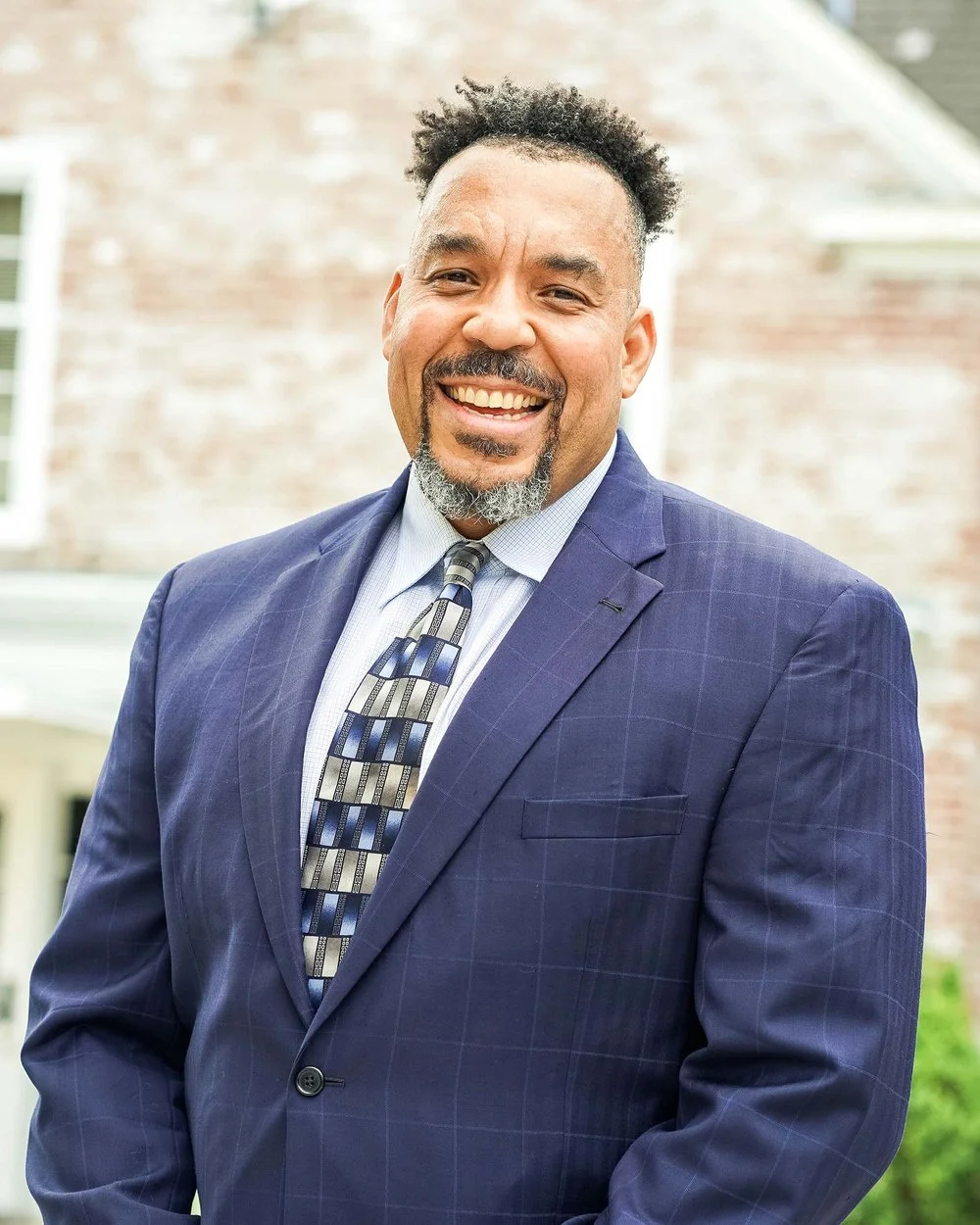
In a similar vein, in my own tenure as Director of Homiletics, I have attempted to further expand on the insights of Drs. Chapell, Agan, and Eswine by pressing them forward into new cultural spaces. My doctoral dissertation, Christ-Centered Preaching in Hip-Hop Culture, explores the question of how preachers can be more compelling in their approach to a specific cultural segment (in this case, young African American males) that is largely unreached and unmotivated by standard approaches to preaching. Principles derived from my research into this topic are being integrated into our preaching curriculum to parallel our solid theological foundation with an important cross-cultural foundation that aims to help students wrestle more fully with what faithful preaching looks like in the face of cultural injustices endemic to society and cultural idols commonly worshipped in our current age.
From a cultural perspective, compelling preaching has to be able to connect with listeners by building bridges from where people are to the Good News of Jesus Christ. When preaching in Jewish synagogues, the apostle Paul built bridges by starting with texts from the Hebrew Scriptures (see Acts 13); when preaching in polytheistic Athens on Mars Hill, he started by recognizing their acknowledgment of an “unknown god” and quoted their own Greek poets to begin making theological connections (see Acts 17). In each case, Paul began with the listeners’ own world and moved from there to show how Jesus best answered their deepest questions, longings, and needs. Compelling preaching today must do the same.
In short, compelling preachers will be those who learn to motivate people to live the Christian life in response to God’s love shown in Jesus, and who learn to connect with people by building bridges from where they are to the gospel. We have designed our curriculum at Covenant in such a way to achieve these goals and to build on the decades of work that we have already been doing in these very areas. We have found that while some students come with a clear understanding of this idea of preaching, many others do not; they f ind this approach revolutionary for their spiritual lives in general and their preaching in particular. Our prayer is that it will be transformative as well for their future congregations and beyond.
How is Covenant Shaping and Equipping Compelling Preachers?
Through the Lilly grant, we aim to build on the solid foundation and existing infrastructure of homiletics training as established by our forebears. The goal is to better equip and support both aspiring and current pastors in their callings to proclaim the unchanging, eternal gospel in a variety of ways to a variety of audiences in a changing world. The grant enables us to do this through three primary activities: (1) preaching cohort groups, (2) preaching conferences and workshops, and (3) the development of preaching resources for the broader church. These program elements will help us to encourage and revitalize seasoned preachers, prepare young preachers and those aspiring to preach, and provide opportunities for preachers of all experience levels, ages, backgrounds, and ethnicities to learn from each other. The program also opens pathways for bi-vocational pastors who may not have previously had access to seminary-level education to learn and grow as preachers as well.
Three types of preaching cohort groups, implemented in phases over the course of the next several years, are a major component of the program. One is a multidenominational, multiethnic group designed for aspiring preachers from local churches in the St. Louis area (identified and invited by their pastors), who will be trained in the Compelling Preaching curriculum. A second group is made up of Reformed University Fellowship (RUF) campus ministers from different parts of the country who are members of the Presbyterian Church in America (PCA). A third group is composed of Doctor of Ministry students from Covenant Seminary focused specifically on compelling preaching, which will require a dissertation on a topic of the students’ choosing that will eventually become part of the compelling preaching resources available to the wider church. The curriculum for these cohort groups will include instruction and research on such topics as preaching Christ in all of the Scriptures, preaching Christ with apologetic sensitivity, preaching Christ in ways that address core cultural concerns of marginalized ethnic groups, preaching Christ while navigating and utilizing technology, preaching to address pivotal moments of crisis in our culture, and preaching as an act of worship in itself. Other topics may be added as needed.
Program participants in all cohorts will have opportunities to learn from experienced practitioners who are themselves compelling preachers. Participants will also get to preach as part of the program, and they will be encouraged to provide structures for constructive feedback within their home congregations.
The second means of equipping and supporting aspiring and current preachers is through a series of preaching conferences, one in the spring and one in the fall each year. The spring conference is conceived as a two-day event held in St. Louis to take advantage of the presence of the large number of compelling preachers who live and minister in this area, many of whom are Covenant Seminary graduates. Eventually, we hope to grow the conference to bring in outside speakers as well from the ranks of more nationally known compelling preachers. The fall conference already exists as our annual Covenant Seminary Preaching Lectures, a one-day, on-campus event featuring a prominent speaker on homiletics topics and primarily aimed at the Seminary’s Master of Divinity students. The preaching cohort groups would be invited to participate in both conferences, which will be livestreamed and recorded for those not able to attend in person.
The third major element of the program is to develop preaching resources for the church, one of which would be the creation of a Compelling Preaching website specifically designed to house sermons, articles, podcasts, recommended books, online preaching course material, preaching conference recordings, and other preaching-related resources. While some of the content on the website will be designed exclusively for the preaching cohort participants, much of it would also be available to anyone who would care to use it. The website is currently still in the planning stage.
In addition to the immediate benefits of Compelling Preaching for those participating in it, our current MDiv students will also benefit as the resources developed and the insights gained from the various cohort groups are applied and incorporated into our existing preaching curriculum. Thus, the program is not only directly in keeping with our institutional mission, history, and strengths, but also will allow us to push our own learning in these areas both deeper and broader to equip many more compelling preachers than we are currently able to do.
Why is Compelling Preaching a VItal Part of God’s Mission?
To answer this question, we once again turn to the apostle Paul, who, in Romans 10:14–17, said:
How then will they call on him in whom they have not believed? And how are they to believe in him of whom they have never heard? And how are they to hear without someone preaching? And how are they to preach unless they are sent? As it is written, “How beautiful are the feet of those who preach the good news!?. But they have not all obeyed the gospel. For Isaiah says, “Lord, who has believed what he has heard from us?” So, faith comes by hearing, and hearing through the word of Christ.
Additionally, the Westminster Shorter Catechism question and answer 155 says:
Q. How is the Word made effectual to salvation?
A. The Spirit of God makes the reading, but especially the preaching of the Word, an effectual means of enlightening, convincing, and humbling sinners; of driving them out of themselves, and drawing them unto Christ; of conforming them to his image, and subduing them to his will; of strengthening them against temptations and corruptions; of building them up in grace, and establishing their hearts in holiness and comfort through faith unto salvation.
All through the book of Acts we see the importance of the Word of God preached as the apostles move out from Jerusalem to Samaria and to the ends of the earth. And down through the centuries we see again and again the power of the preached Word of God, especially as the early Reformers and their spiritual children began to re-emphasize strong expository preaching and clear gospel proclamation after the dimmer light of the Middle Ages. It is the power of the Word preached that spread the gospel first throughout the Mediterranean world, then across lands and seas and continents to reach our spiritual ancestors across the globe and in modern America. And it is the power of the Word of God preached that alone can bring the same gospel hope to a society and a world that now more than ever seems to have lost its moral and spiritual moorings.
Though today we have almost unlimited access to the Bible in printed and electronic forms, and more resources for studying the Bible than at any other time in history, the Lord still chooses to work most mightily through his Word as it is preached by local pastors, church planters, and missionaries, and proclaimed informally by friends, neighbors, family members, coworkers, or even strangers. He loves to work through human instruments to accomplish his great goals. Thus, the more we as educators can emphasize the power of preaching and the better we can prepare those who will be bringing God’s Word to people in local churches and other ministry settings to do so in compelling and life-transforming ways, the more we—and our students and those to whom they minister—participate in God’s ongoing mission to redeem lost souls and ultimately restore his beautiful creation.
Covenant Seminary’s long history of shaping and equipping compelling gospel preachers for this purpose is exemplified in the quality of our pastoral graduates and the effectiveness of their preaching ministries. We routinely hear from donors and others in churches pastored by Covenant alumni about how greatly those churches—and they personally—have been impacted by our graduates’ preaching. Pastoral search committees often tell us that they look specifically for Covenant grads because there is just something different about them, an air of grace and gospel-heartedness that informs the way they approach not only the sacred task of preaching but their entire ministry. We praise God that this is the case and are grateful for how he has worked through Covenant over the decades to prepare these servants for his church. We look forward to seeing how the Lord will continue to use us and our graduates to bring his gospel message to the world, not for our sakes, but for his glory and, as our mission statement notes, “all for God’s mission.”
Note: This article first appeared in the fall 2024 edition of Covenant magazine.